
USDA vs. FHA Loans in West Virginia: Which One Is Right for You? If you're thinking about buying a home in West Virginia, you've probably heard about USDA and FHA loans. They're two of the most popul

USDA vs. FHA Loans in West Virginia: Which One Is Right for You?
If you're thinking about buying a home in West Virginia, you've probably heard about USDA and FHA loans. They're two of the most popular loan programs for first-time homebuyers, and both can make homeownership more affordable. The question I hear all the time is, "Which one is better?"
The truth is, neither loan is better for everyone. It depends on where you're buying, your financial situation, and what you're hoping to accomplish.
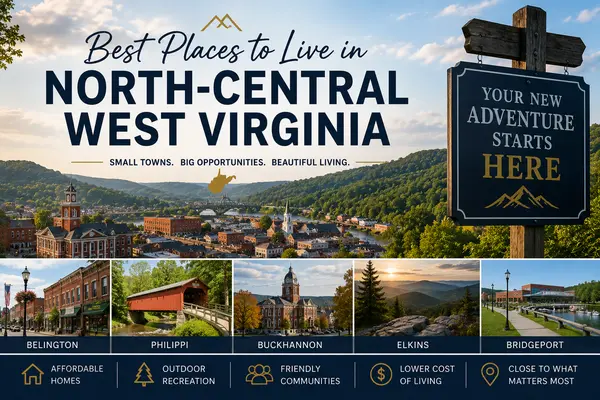
I'm Derek Hart, REALTOR® with eXp Realty, and I help buyers throughout Belington, Philippi, Buckhannon, Elkins, Bridgeport, Clarksburg, Grafton, and the surrounding areas of North-Central West Virginia. One thing I've learned is that many buyers don't realize just how many financing options are available to them. Hopefully, this guide will help clear up some of the confusion.
What Is a USDA Loan?
Despite the name, a USDA loan isn't just for farmers.
A USDA loan is backed by the United States Department of Agriculture and is designed to help people buy homes in eligible rural and suburban areas. The good news is that many communities throughout Barbour, Randolph, Upshur, Tucker, Harrison, and surrounding counties qualify for USDA financing.
One of the biggest myths I hear is that USDA loans are only for people with very low incomes.
That's simply not true.
USDA loans are designed for low- to moderate-income households, but the income limits are much higher than most people expect. Around here, many working families qualify without even realizing it. Teachers, nurses, factory workers, first responders, mechanics, office employees, and many other hardworking West Virginians often fall within the program's income guidelines.
I've had buyers tell me they assumed they made too much money for a USDA loan. After speaking with a lender, they found out they actually qualified.
If you've never looked into USDA financing because you thought your income was too high, it's worth having the conversation. You might be surprised.
Advantages of a USDA Loan
No Down Payment
One of the biggest benefits is that qualified buyers can often purchase a home with no down payment.
For many first-time buyers, that can make the difference between buying now and waiting several more years.
Lower Monthly Mortgage Insurance
USDA loans usually have lower monthly mortgage insurance costs than FHA loans, which can help reduce your monthly payment.
Competitive Interest Rates
USDA interest rates are often very competitive, helping buyers keep their monthly housing costs affordable.
Great for Rural West Virginia
If you're looking for a home around Belington, Philippi, Buckhannon, Elkins, Grafton, Parsons, Beverly, Mill Creek, or many other rural communities, there's a good chance the property may qualify.
Things to Keep in Mind About USDA Loans
USDA loans aren't the right fit for everyone.
The home must be located in an eligible area, and there are household income limits that you'll need to meet.
The home also has to be your primary residence. USDA loans aren't intended for vacation homes or investment properties.
A local lender can quickly tell you if both you and the property qualify.
What Is an FHA Loan?
FHA loans are insured by the Federal Housing Administration and have helped millions of Americans become homeowners.
Unlike USDA loans, FHA financing isn't limited by rural maps. That means buyers can use FHA loans almost anywhere, whether they're buying in Bridgeport, Clarksburg, Buckhannon, Elkins, Belington, or many other West Virginia communities.
Advantages of an FHA Loan
Low Down Payment
Many qualified buyers can purchase a home with as little as 3.5% down.
That makes FHA loans one of the most popular options for first-time buyers.
More Flexibility on Location
If the home you're interested in isn't located in a USDA-eligible area, FHA financing may still be available.
Flexible Qualification Guidelines
FHA loans are designed to make homeownership available to more buyers, especially those who may not qualify for conventional financing.
Things to Keep in Mind About FHA Loans
FHA loans require both an upfront mortgage insurance premium and monthly mortgage insurance.
They also require a down payment, unlike USDA loans.
In addition, FHA appraisals include minimum property standards. If a home has significant safety or condition issues, repairs may need to be completed before closing.
USDA vs. FHA at a Glance
| Feature | USDA | FHA |
|---|---|---|
| Down Payment | Usually 0% | Usually 3.5% |
| Location Restrictions | Yes | No |
| Household Income Limits | Yes | No |
| Monthly Mortgage Insurance | Usually Lower | Usually Higher |
| Rural Homes | Excellent Choice | Excellent Choice |
| City Homes | Limited | Excellent Choice |
Which Loan Should You Choose?
Every buyer's situation is different.
A USDA loan might make more sense if you:
- Want little or no money down.
- Are buying in an eligible rural area.
- Meet the income guidelines.
- Want lower monthly mortgage insurance.
An FHA loan may be a better option if you:
- Are buying in a city or neighborhood that doesn't qualify for USDA.
- Have money saved for a down payment.
- Need more flexibility when choosing where to buy.
The best way to know for sure is to speak with a trusted local lender who can compare both loan programs using your specific financial information.
Can You Use a USDA Loan Around Here?
Absolutely.
Many buyers are surprised to learn how much of North-Central West Virginia qualifies for USDA financing.
Homes in and around Belington, Philippi, Buckhannon, Elkins, Grafton, Parsons, Beverly, Junior, Mill Creek, and many surrounding communities may qualify.
Eligibility is based on the property's location, so it's always a good idea to check before making an offer.
Frequently Asked Questions
Are USDA loans only for low-income buyers?
No. That's probably the biggest misconception about the program. USDA loans are designed for low- to moderate-income households, and many working families throughout North-Central West Virginia qualify.
Can I really buy a home with no down payment?
If you qualify for a USDA loan and the property is eligible, you may be able to purchase with no down payment. Closing costs and prepaid expenses are separate and may still apply.
Which loan has the lower monthly payment?
That depends on several factors, including the purchase price, interest rate, taxes, insurance, and mortgage insurance. In many situations, USDA loans have lower mortgage insurance costs than FHA loans.
Which loan is easier to qualify for?
That depends on your financial situation. A local lender can review your income, credit history, and debt-to-income ratio to help determine which loan fits your needs.
Final Thoughts
Buying a home is about more than choosing a loan. It's about finding the right home, in the right community, with financing that fits your budget.
Whether you're looking in Belington, Philippi, Buckhannon, Elkins, Bridgeport, Clarksburg, Grafton, or anywhere across Barbour, Randolph, Upshur, Harrison, or Tucker County, I'd be glad to help you through the process.
I'm Derek Hart, REALTOR® with eXp Realty, and when you work with me, you'll work directly with me from your first phone call until the day you get the keys. My goal isn't to pressure you into buying a house. It's to answer your questions honestly, help you understand your options, and make the process as smooth as possible.
If you're thinking about buying a home or just want to know where to start, feel free to reach out. I'd be happy to help.
Categories
Recent Posts


GET MORE INFORMATION